Microsoft Excel
You can use Excel as a source to import quantity item takeoff data into Estimate. Using Excel makes it easy to import data from other data sets or sources and lets you set up and organize your data before importing it.
In the Quantity Takeoff section, you can choose from the following:
-
Quantity Item Sources — Opens the Quantity Item Sources Register where you can select Excel as your source and then select your Excel source file to bring the takeoffs into the Quantity Item Register. You can save your mappings as a setting template to use for future imports.
-
Quantity Items — Opens the Quantity Items Register where you can view the list of imported quantity items from the Excel source document. After the import is complete, you can apply quantity items to cost items in the Cost Item Record’s Quantity Items tab. For more information, see Quantity items.
-
Quantity Item Employment — Opens the Quantity Item Employment Register where you can view the list of quantity items employed on cost items. You can view the CBS position code location of the quantity item’s employment and informational columns that provide details from the Bluebeam takeoff data, which are similar to the Quantity Item Register columns.
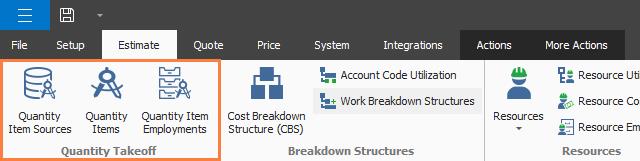
To import quantity items from Excel, select Quantity Item Sources. In the Quantity Item Sources Register, select Excel as the source to import data. You can then select an Excel source file.
In the Quantity Item Sources Register, the Source System column shows the source used to import quantity items. You can also view the list of source files in the grid.
You can select multiple files to import. Estimate uses the first sheet in each Excel file to import quantity items. The Excel files can remain open during the import process, allowing you to better manage the process.
After you map Excel fields to Estimate fields, you can save the mappings as a template in Settings to use for future imports. You can also save the template to your computer as a backup to share with other users, or use in another Estimate environment. For more information, see Settings overview.